Customer Portal Software for Your Business
Have Custom Web Portals Developed
We develop custom customer and partner portals for a wide range of business requirements
For many companies, personalized portals are the ideal solution for essential processes and requirements. Portals and customer engagement platforms create central interfaces between your business, your customers, and your partners. They consolidate products, applications, and services in one place, enable efficient workflows, and foster customer loyalty. In all our software solutions, the needs of your customers and users are at the center. In close collaboration with you, we fully leverage the benefits of custom software. Whether it’s a customer portal, service portal, employee portal, partner portal, supplier portal, or digital marketplace – individually designed portals simplify users’ daily tasks and increase value for your business.
Implemented Customer Portal Software Projects
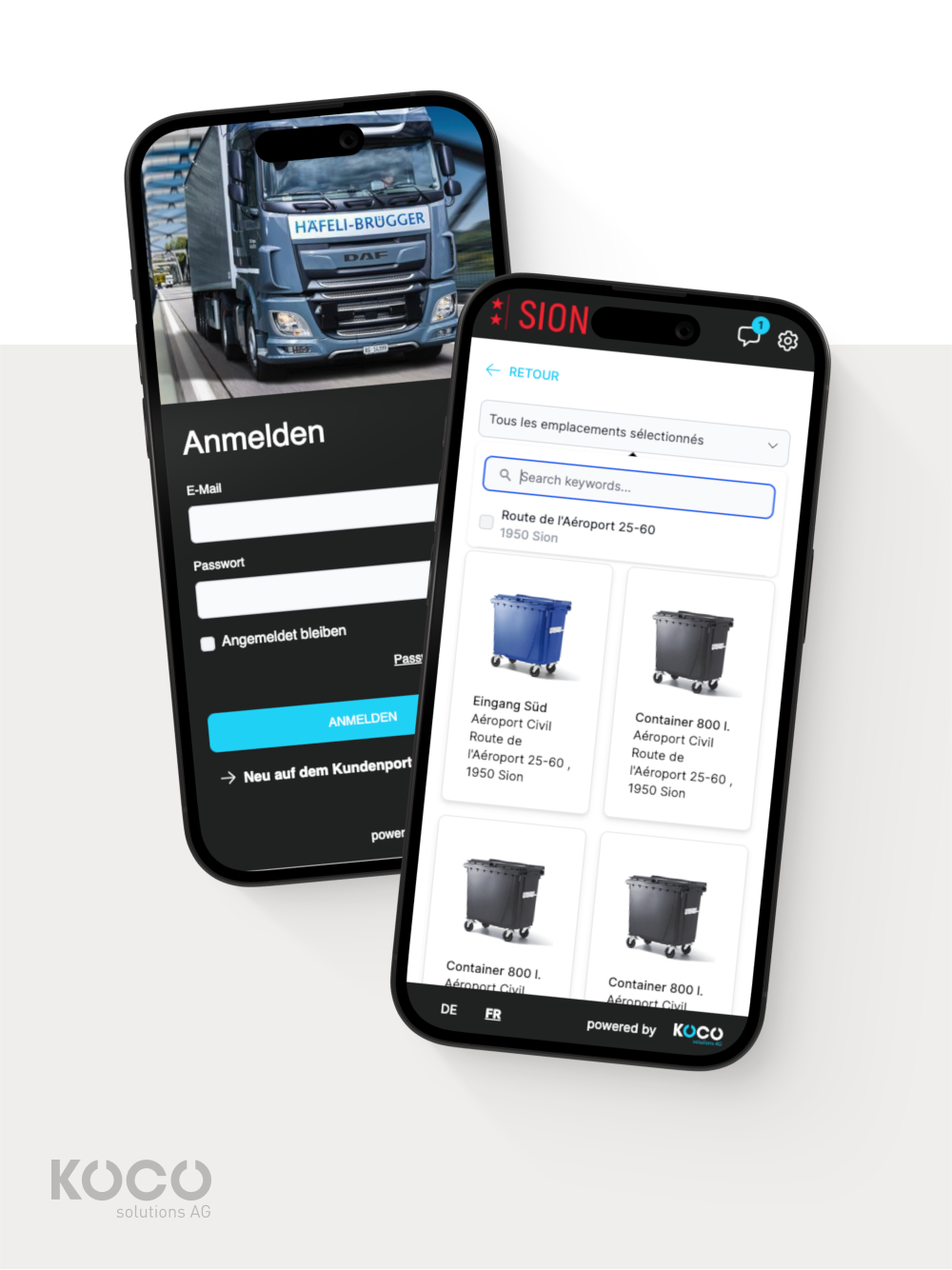
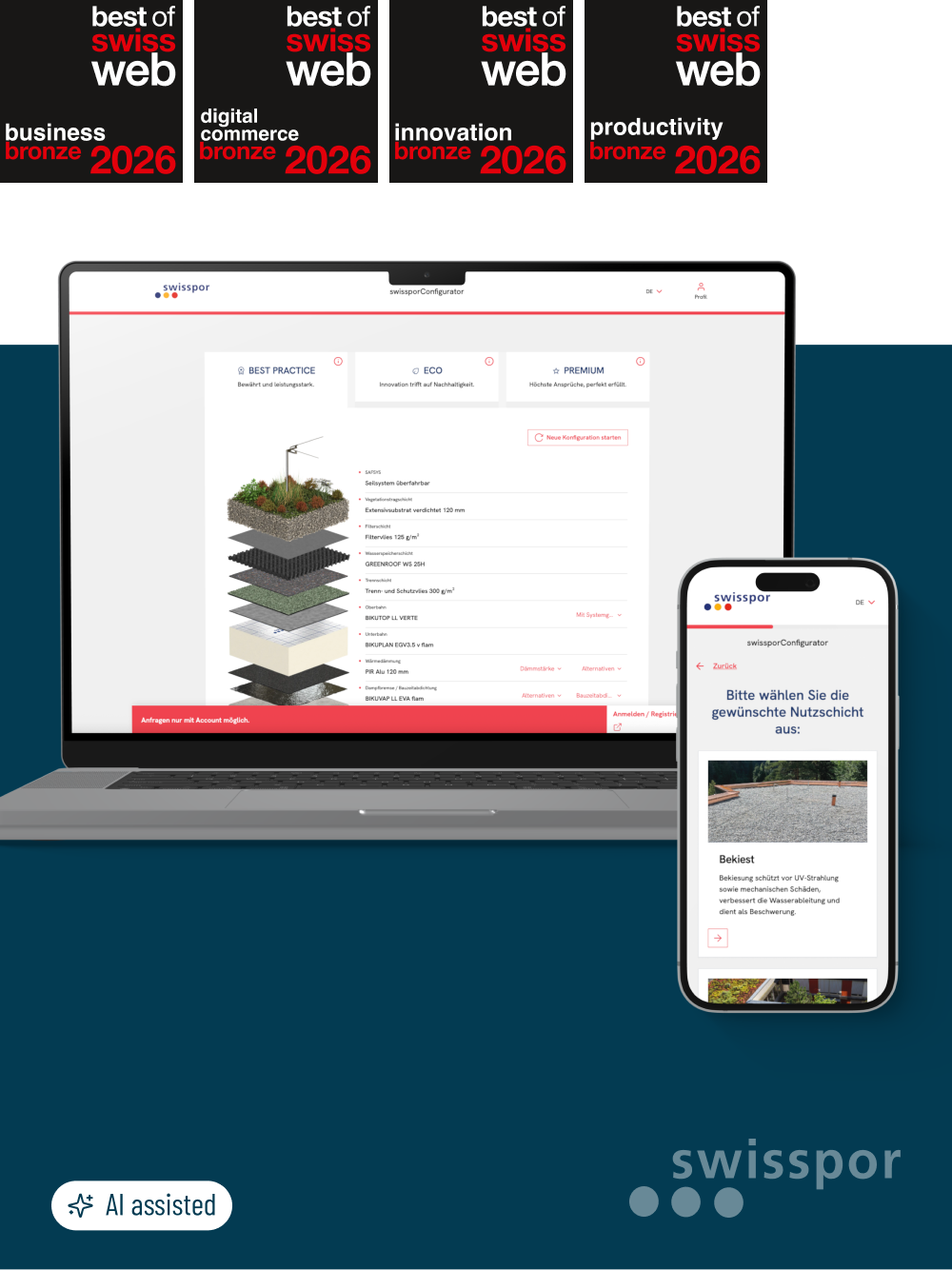
References
We support you from the initial idea to the implementation and maintenance of the solution with our services.
Skills
Our Time-Tested Process for Custom Customer Portals
Free Initial Consultation
Every digital project begins with a challenge and great ideas to solve it. The first step toward your digital future is an initial, free consultation. This allows us to gain an initial understanding of the challenge and discuss the next steps.
Scope & Parameters
Before your ideas can be implemented, careful planning of the project is essential. This includes defining the project scope, discussing conditions, setting a timeline with dependencies, determining the project methodology, and much more.
Requirements Analysis
To identify the right digital applications, it is crucial for us to understand your needs. This analysis forms the foundation for designing and developing modern customer portals. A structured capture of requirements and expectations for the customer portal software is essential.
Design & Concept Development
In this phase, the architecture and UI design are developed. Interfaces to external systems (e.g., ERP and CRM) are also planned and defined. If needed, a prototype is created and presented. We place great emphasis on usability in all our projects.
Development
Now we get to the core: based on the previous steps, the portal is developed and interfaces to external systems are implemented. This phase is naturally the longest in the process and is managed very agilely. This approach has proven to be extremely flexible, efficient, and effective.
Testing
Undoubtedly, the application is continuously tested and refined throughout the entire development process. You and your users are involved as needed. In this step, integration and end-to-end tests are performed. At the end of this phase, the solution is approved, giving you the green light for productive use.
Go-Live
You’ve made it – we’re live! This phase marks the actual goal: the new customer portal goes live and becomes accessible to users online.
Operations, Maintenance & Support
After the successful launch of your new customer portal software, operations begin. Depending on your needs, your software processes are monitored and availability is ensured.
FAQ – Frequently Asked Questions
- Which companies benefit from a customer or service portal?
Customer and partner portals are particularly valuable for companies that regularly collaborate with customers, distributors, or business partners. Typical use cases include manufacturing companies, industrial businesses, wholesalers, or service providers with complex service processes. A portal helps centralize information and enables companies to handle recurring requests more efficiently.
- What benefits do customer and partner portals offer?
Customer and partner portals provide a central platform for communication between companies and their users. They enable quick access to services and important information, positively impacting both customer satisfaction and business outcomes. Automating requests saves companies time and resources while maintaining a professional level of service. Through a central portal, customers can access invoices, contracts, support requests, or order histories at any time. This reduces inquiries, relieves internal teams, and improves operational efficiency. At the same time, companies gain transparency across all customer interactions and can optimize processes accordingly. In today’s business environment, such portals have become an essential solution: they improve the user experience, strengthen customer relationships, and give companies a clear strategic advantage.
- Which features should a customer or service portal provide?
The specific features of a portal depend on the company’s requirements. Common functionalities include order overviews, document and product information, service or support requests, project information, and personalized content. Self-service functions such as placing orders or configuring products are increasingly expected in B2B environments. In today’s digital landscape, customer portal software is evolving rapidly. Modern portals integrate artificial intelligence to enable personalized experiences and improve collaboration across teams. Mobile optimization is also essential, allowing users to access the portal from different devices and enhancing the overall user experience. Companies that embrace these developments can increase efficiency and sustainably improve customer satisfaction.
- Can customer and service portals be integrated with existing systems?
Yes. Customer and partner portals are typically closely integrated with existing enterprise systems. In B2B environments in particular, this integration is crucial so that customers and partners can directly access relevant information. Portals are often connected to ERP systems for orders and transactions, CRM systems for customer data, or PIM systems for product information. This allows users to track orders, access documents, or submit service requests directly within the portal. Through these integrations, seamless digital processes are created between companies, customers, and partners.
- How long does it take to implement a customer or partner portal?
The implementation time depends on the scope, functionality, and integrations required. Simpler portals can be implemented within a few weeks, while larger platforms with extensive features and system integrations may take several months. In many cases, portals are built step by step and expanded over time.
- What security features are particularly important for customer portals?
Security plays a central role in customer portals. Companies should choose platforms that provide advanced security features to reliably protect user data. These include modern encryption technologies, regular security updates, and clearly defined access controls. A secure portal is not only required for compliance but also essential for building trust with users. The higher the security standards, the more willing customers are to store their data and documents within the portal.