Composable Commerce Agency
For modular e-commerce platforms and digital sales processes
What is Composable Commerce?
Composable Commerce is a modular architectural approach for digital commerce platforms. Rather than incorporating all functions into a single system, specialised solutions such as Shopify Plus, a CMS, an ERP system, a PIM system or a product configurator are interconnected via APIs. This allows individual components to be expanded or replaced independently of one another. This allows businesses to remain flexible and lays the groundwork for future technologies such as AI agents or new sales channels.
Why are companies turning to composable commerce?
Many companies still rely on monolithic e-commerce systems that have evolved over the years. New requirements, such as product configurators, customer portals or AI applications, can often only be integrated into these systems at great expense. Composable Commerce solves this problem through a modular architecture, which allows individual systems to be developed independently of one another.
Up to 100% digital sales processes thanks to modular components
The challenges of traditional e-commerce solutions
Monolithic all-in-one platforms such as Magento or established legacy systems are increasingly reaching their limits. New requirements can often only be implemented at great expense, as the online shop, CMS, business logic and integrations are heavily interdependent.
The consequences are often:
- expensive relaunches every three to five years
- limited adaptability to new market requirements
- high maintenance and operating costs
- restricted scalability and extensibility
- difficulties in implementing AI use cases
- significant vendor lock-in with little flexibility
Advantages at a Glance
Through pre-built Modules and Standard Interfaces (ERP, AI agents)
up to Three Times Faster Time to Market
New features can be easily added or replaced
Flexible and Expandable
Less new development with full customization and quality
Lower Project Costs
Seamless integration with ERP, PIM, CRM, and more thanks to API-first
Simple Integration
No Costly Relaunches, can be updated Step by Step
Future-Proof and Open
Ready for agents and AI use cases thanks to MCP and structured data
Ideal for AI Use Cases
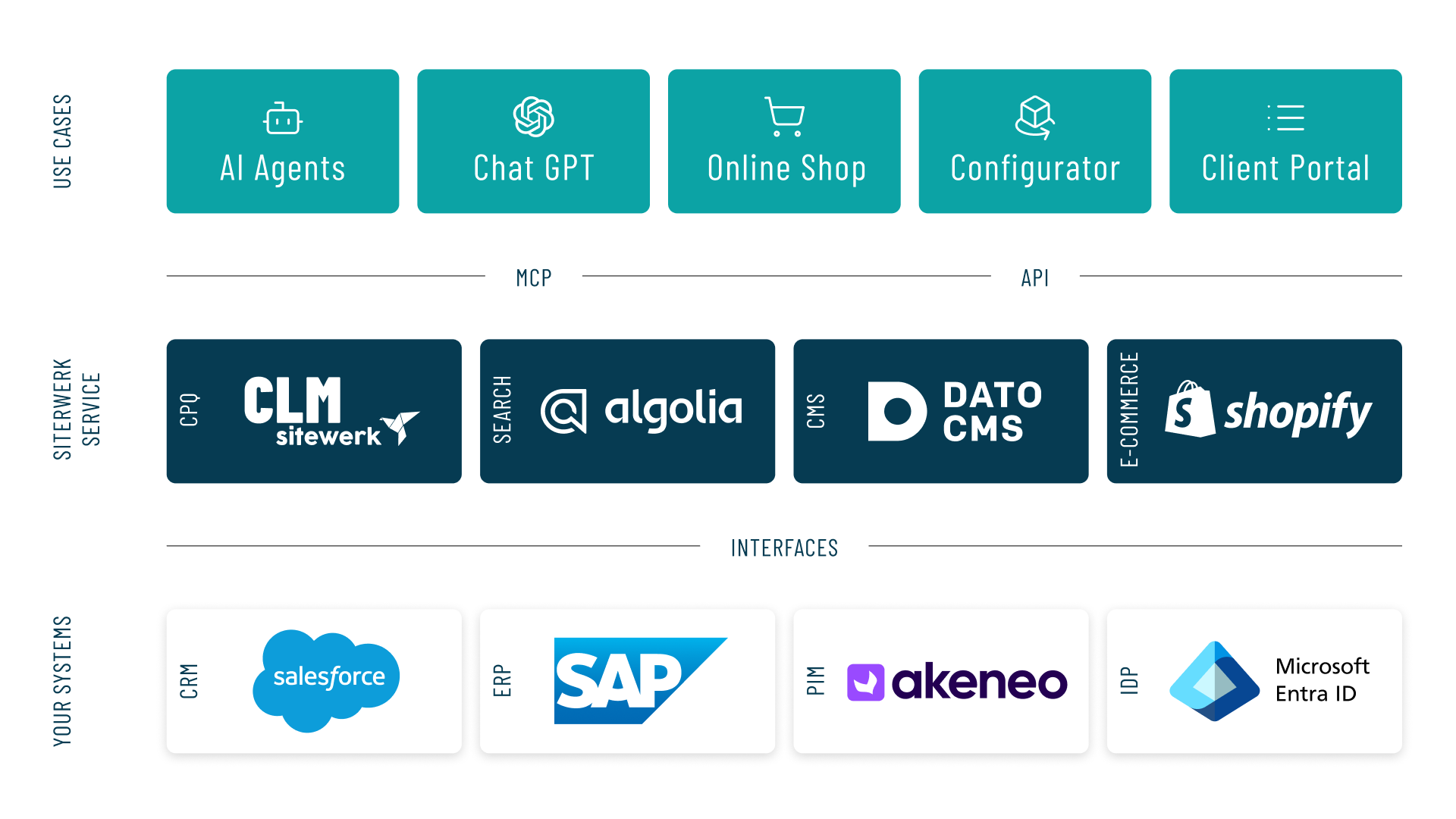
Modular components for complex digital commerce projects
Our digital commerce platform is based on a modular architecture comprising freely combinable building blocks. This enables us to create bespoke commerce solutions, integrate existing systems such as ERP, PIM or CRM systems, and flexibly implement new requirements.
Thanks to our API-first approach and modern protocols such as MCP, applications such as ChatGPT or Perplexity can also be integrated. This enables AI-powered customer experiences, intelligent assistants and automated processes throughout the customer journey, without the need for costly complete relaunches.
The Modules in Detail
«We are five times bigger than our second-largest competitor – we have grown by 500 per cent. One of the main reasons for this was Sitewerk’s e-commerce platform with its configurator.»
Samuel Beer, COO Helion Energy AG (AMAG Group)

We are a Shopify Plus Partner
We rely on Shopify Plus as a flexible e-commerce module. This enables us to create high-performance, custom-designed online stores for B2B, D2C, or B2C customers. E-commerce software doesn't get any more flexible than this: Shopify Plus is integrable, expandable, customizable, and endlessly scalable. As a Shopify Plus partner, we are one of the best Shopify agencies worldwide.
Composable Commerce in practice
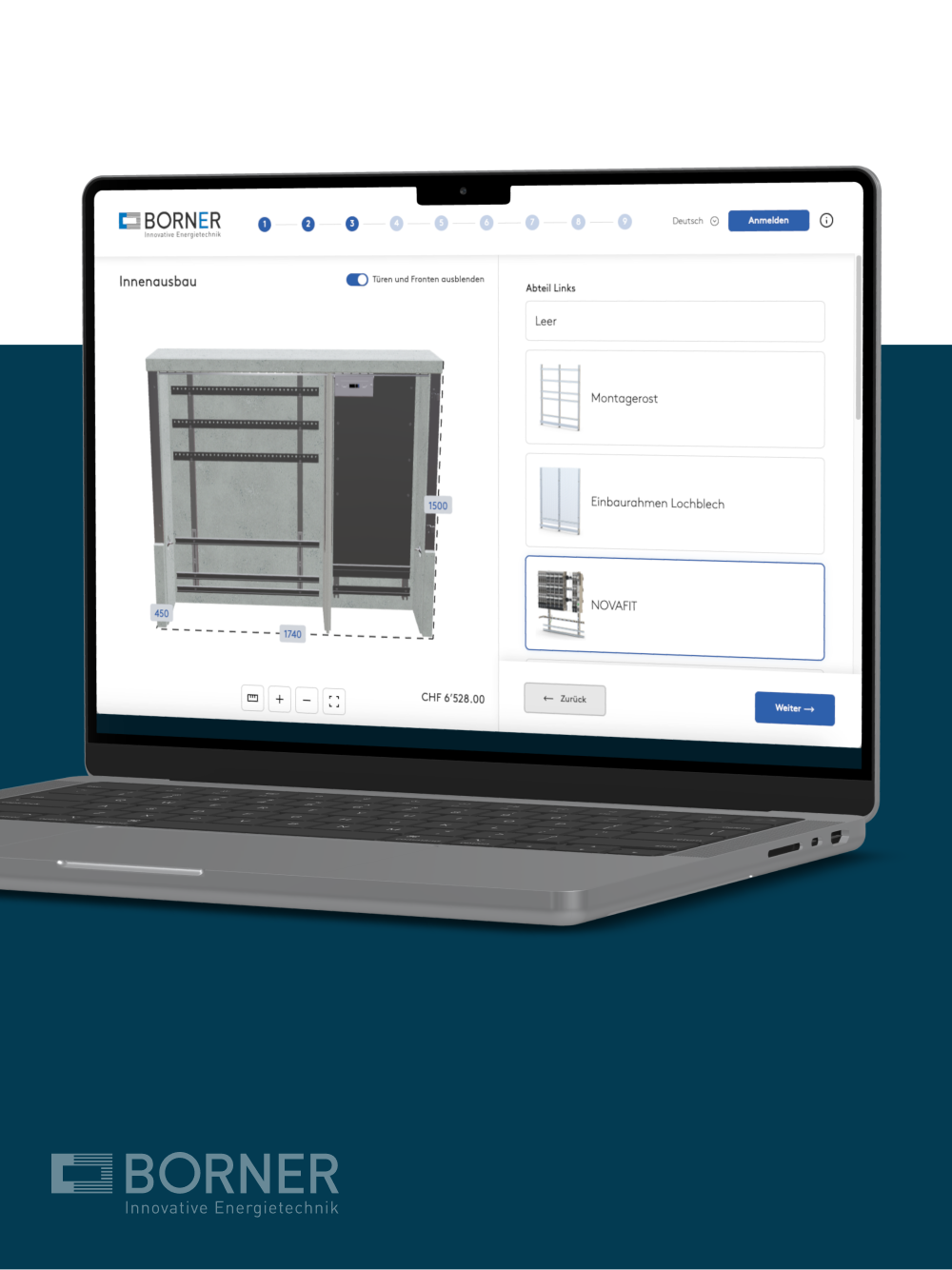
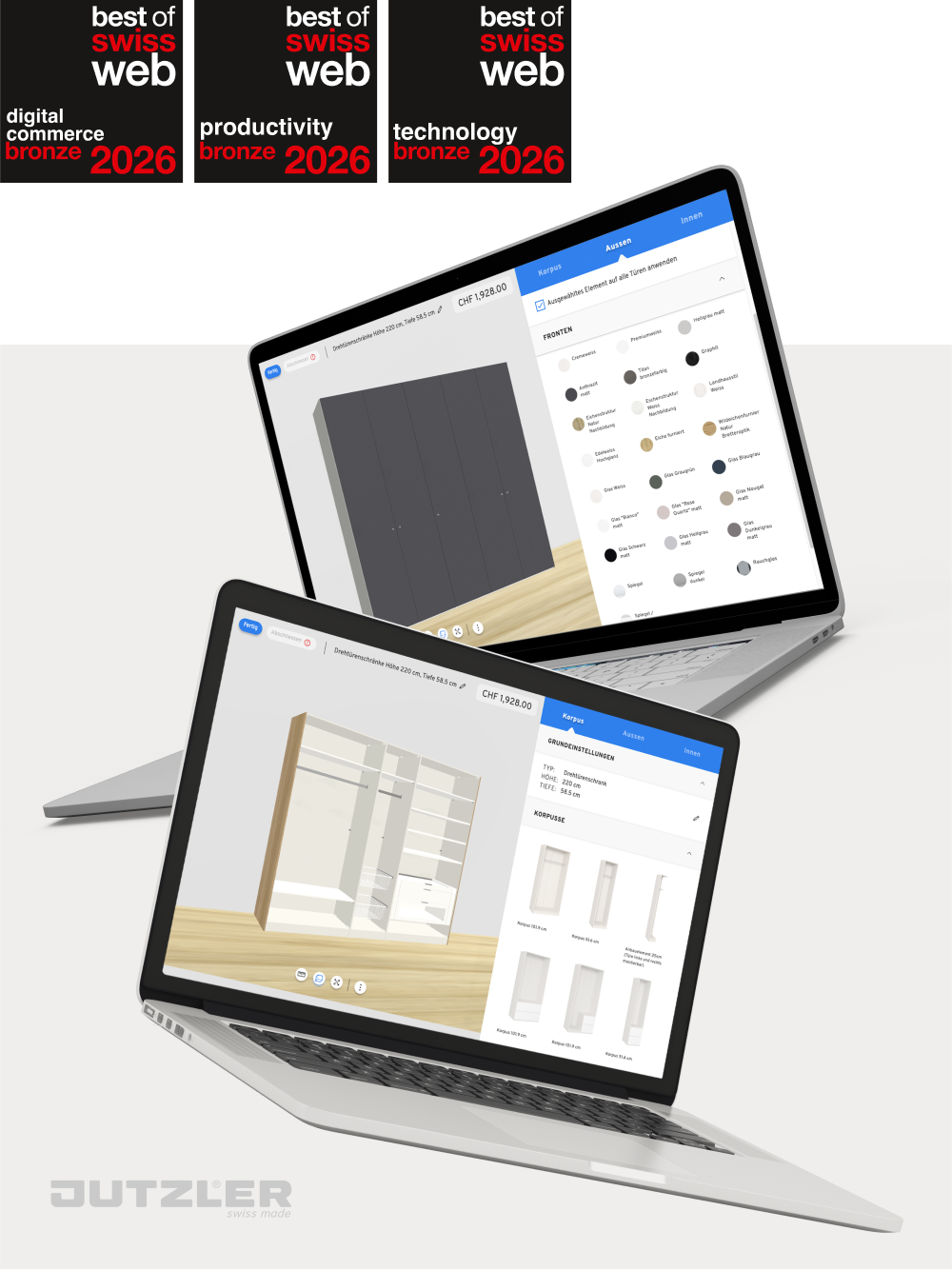
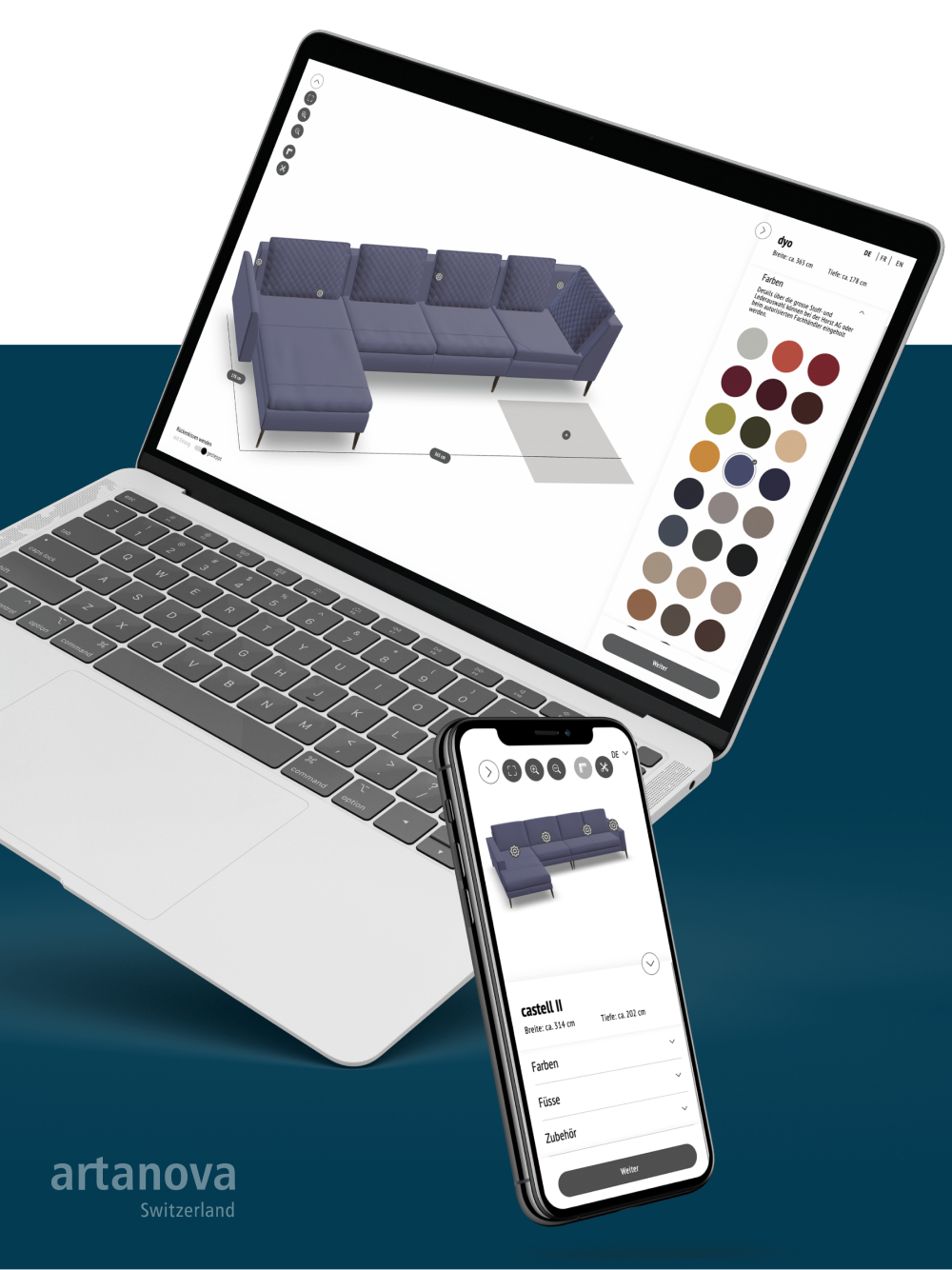
References
FAQ - requently asked questions
- What is Composable Commerce?
Composable Commerce ist ein modularer Architekturansatz für digitale Commerce-Plattformen. Anstatt alle Funktionen in einem einzigen System abzubilden, werden spezialisierte Lösungen wie Shop, CMS, ERP, PIM, CRM oder Produktkonfiguratoren über APIs miteinander verbunden. Dadurch können Unternehmen einzelne Komponenten unabhängig voneinander erweitern, austauschen oder modernisieren.
- When is composable commerce worthwhile?
Composable Commerce is a sensible option for businesses whose existing e-commerce systems have become too inflexible, require too much maintenance or are difficult to scale. This approach is particularly useful for complex products, multiple sales channels, bespoke sales processes, or when systems such as ERP, PIM, CRM, customer portals or product configurators need to be seamlessly integrated.
- What are the benefits of composable commerce?
Composable Commerce offers greater flexibility, better scalability and faster adaptation to new market requirements. Companies can develop individual systems in a targeted manner without having to rebuild the entire platform. At the same time, they can integrate existing systems, roll out new digital services more quickly and better prepare for future requirements such as AI applications or agentic commerce.
- What is the difference between composable commerce and headless commerce?
In headless commerce, the front end is separated from the back end of a shop system. This allows content and commerce functions to be delivered more flexibly across various digital touchpoints. In composable commerce, the entire commerce platform is built using a modular structure, comprising, for example, a shop, CMS, ERP, PIM, CRM, search function, product configurator or customer portal. Headless commerce can therefore form part of a composable commerce architecture.
- Which systems can be integrated?
A wide range of existing and new systems can be integrated into a composable commerce architecture. These include ERP, PIM, CRM, CMS, DAM, CPQ, payment, logistics, marketing automation and analytics systems. Integration is usually achieved via APIs or middleware, ensuring that product data, customer data, prices, orders and other information are available across all systems.
- Can Shopify Plus form part of a composable commerce architecture?
Yes. Shopify Plus can be used as a commerce component within a composable commerce architecture. The platform handles key shop and checkout functions and can be connected via APIs to ERP, PIM, CRM and CMS systems, customer portals or product configurators. This creates a flexible commerce platform that can be expanded in stages.
- Is composable commerce also suitable for B2B?
Yes, Composable Commerce is particularly well suited to B2B companies with complex products, customised pricing logic, multiple user roles or sophisticated integrations. Customer portals, product configurators, CPQ solutions, ERP integrations and self-service functions can be combined in a modular way, thereby supporting end-to-end digital sales processes in the B2B sector.