
Online Shop Agency for Tailored E-Commerce Solutions
Certified Swiss Shopify Plus Partner
Forward-thinking E-Commerce Agency for B2C & B2B Online Shops
As an e-commerce agency, we provide tailor-made services designed to meet the demands of modern online retail. Together with your company, we develop a strategy that supports your business goals and engages your customers. This includes not only the technical implementation and optimization of your shop, but also in-depth analysis and strategic consulting to create solutions perfectly aligned with your individual requirements.
A crucial element is web design, which plays a key role in the success of any online shop. In addition, we streamline CRM and PIM integrations to make data management more efficient.
Depending on your target group, product complexity, and system landscape, we apply both traditional approaches and modern headless architectures. For complex, scalable commerce projects, we particularly recommend Shopify Plus – the powerful enterprise solution for rapid growth, international expansion, and seamless integrations.
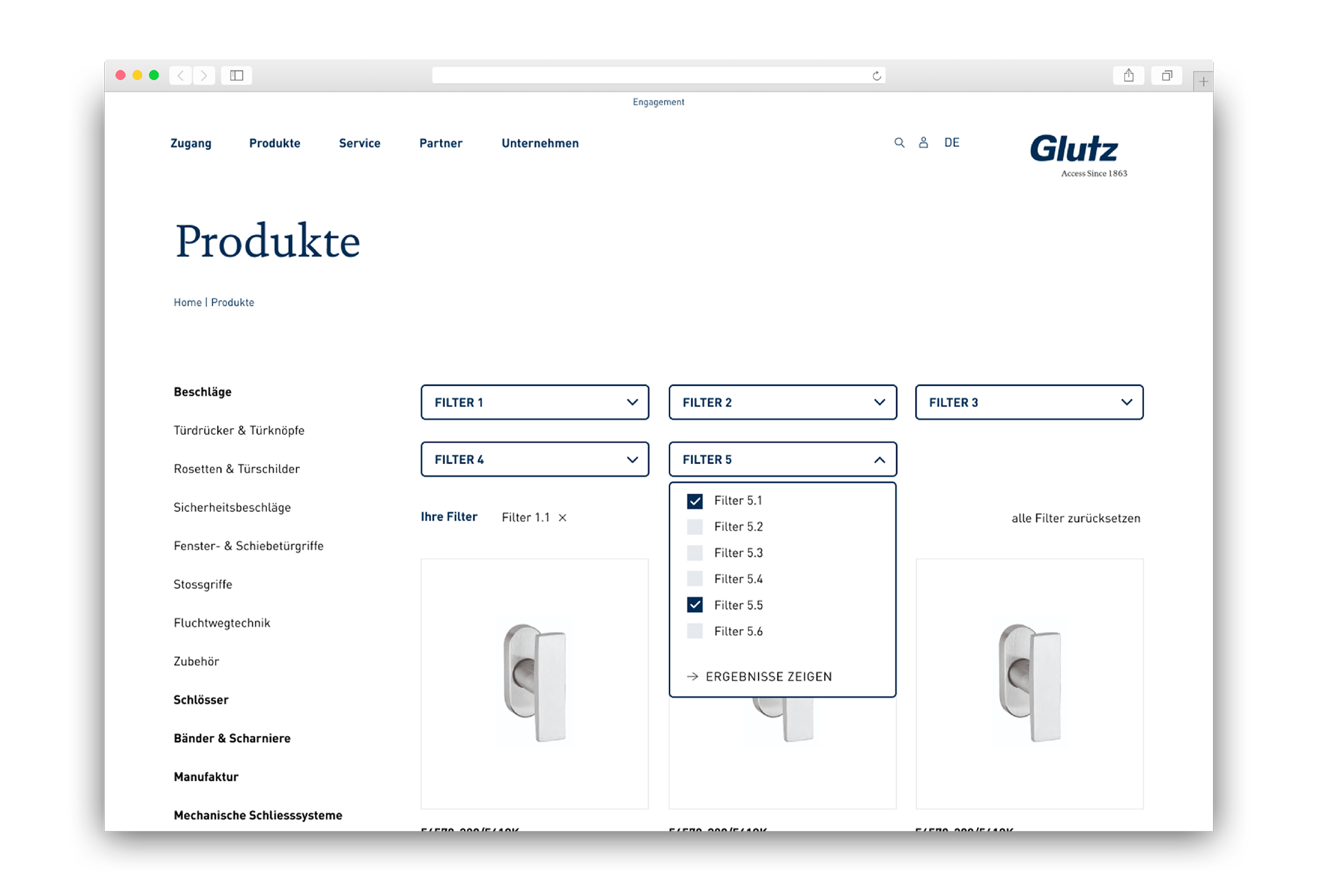
As a specialized e-commerce agency, we implement B2B and B2C online shop solutions using Shopify Plus.

Swiss Shopify Plus Partner Agency
As an agency, we create high-performance, fully customized e-commerce solutions with Shopify Plus that integrate seamlessly with existing systems – from ERP to logistics. With flexible APIs, automatable workflows, and easy connections to external services, even complex business processes can be efficiently managed digitally – whether in B2C or B2B environments.
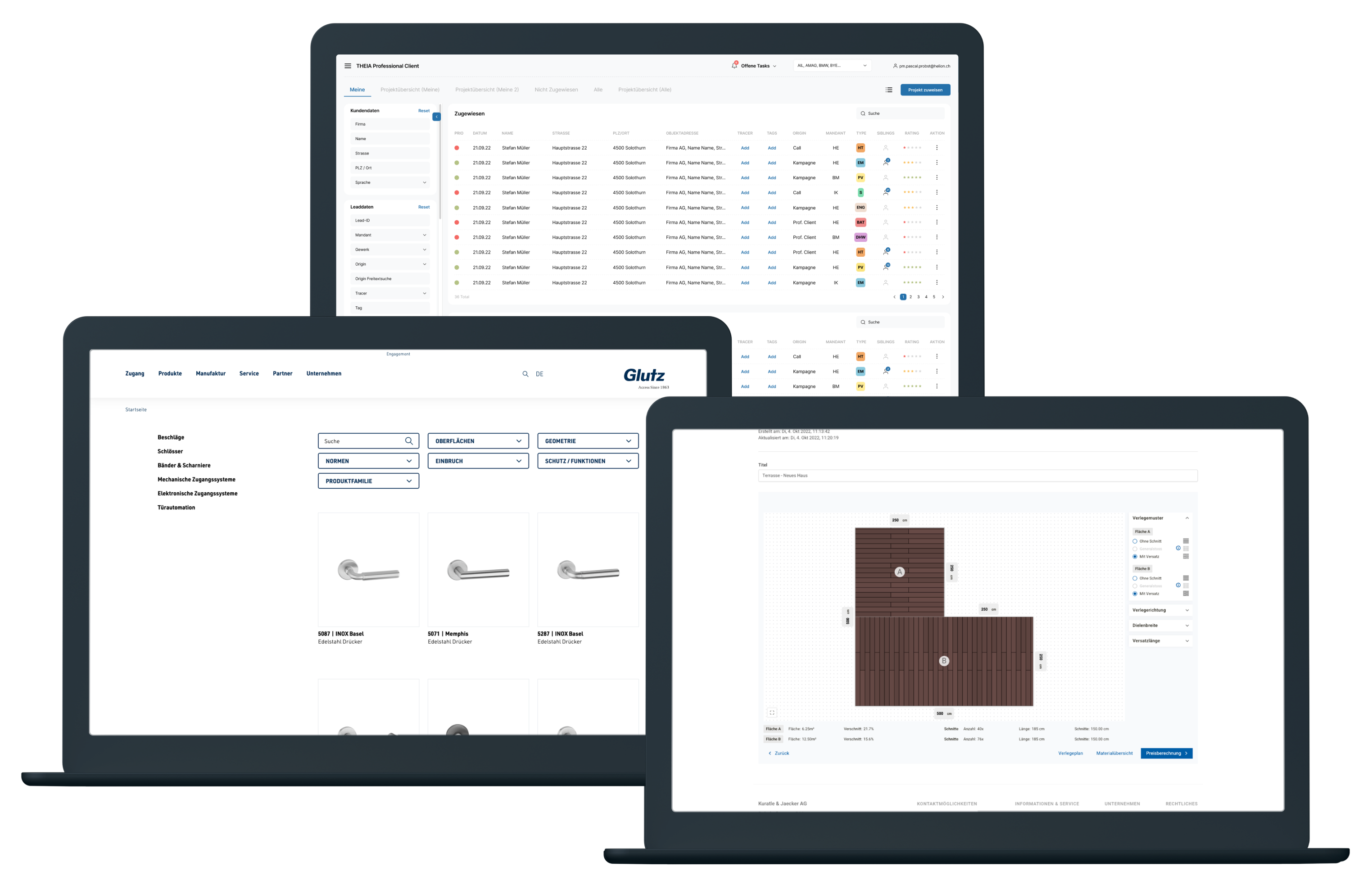
A Selection of Our Digital Commerce Projects
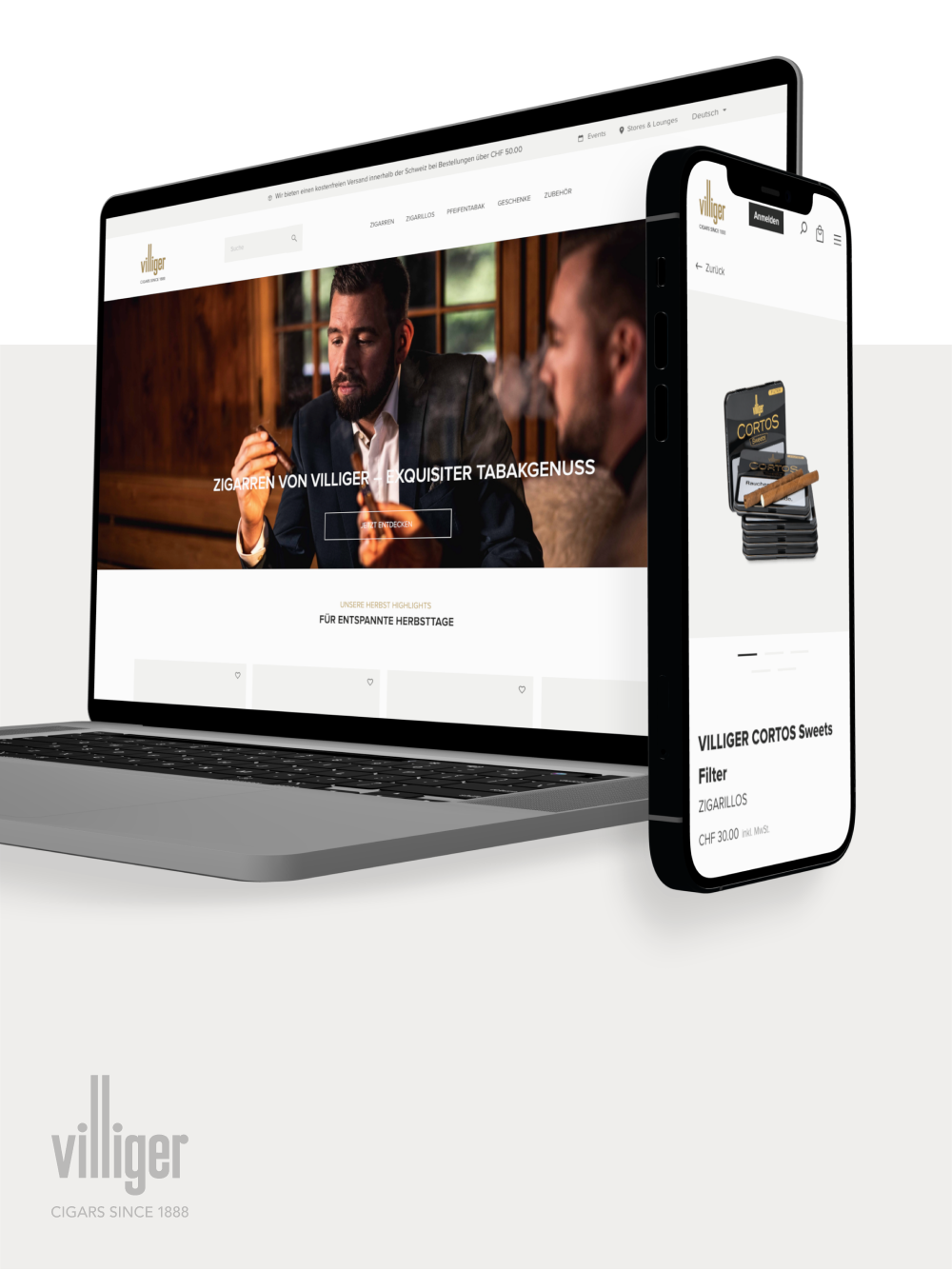
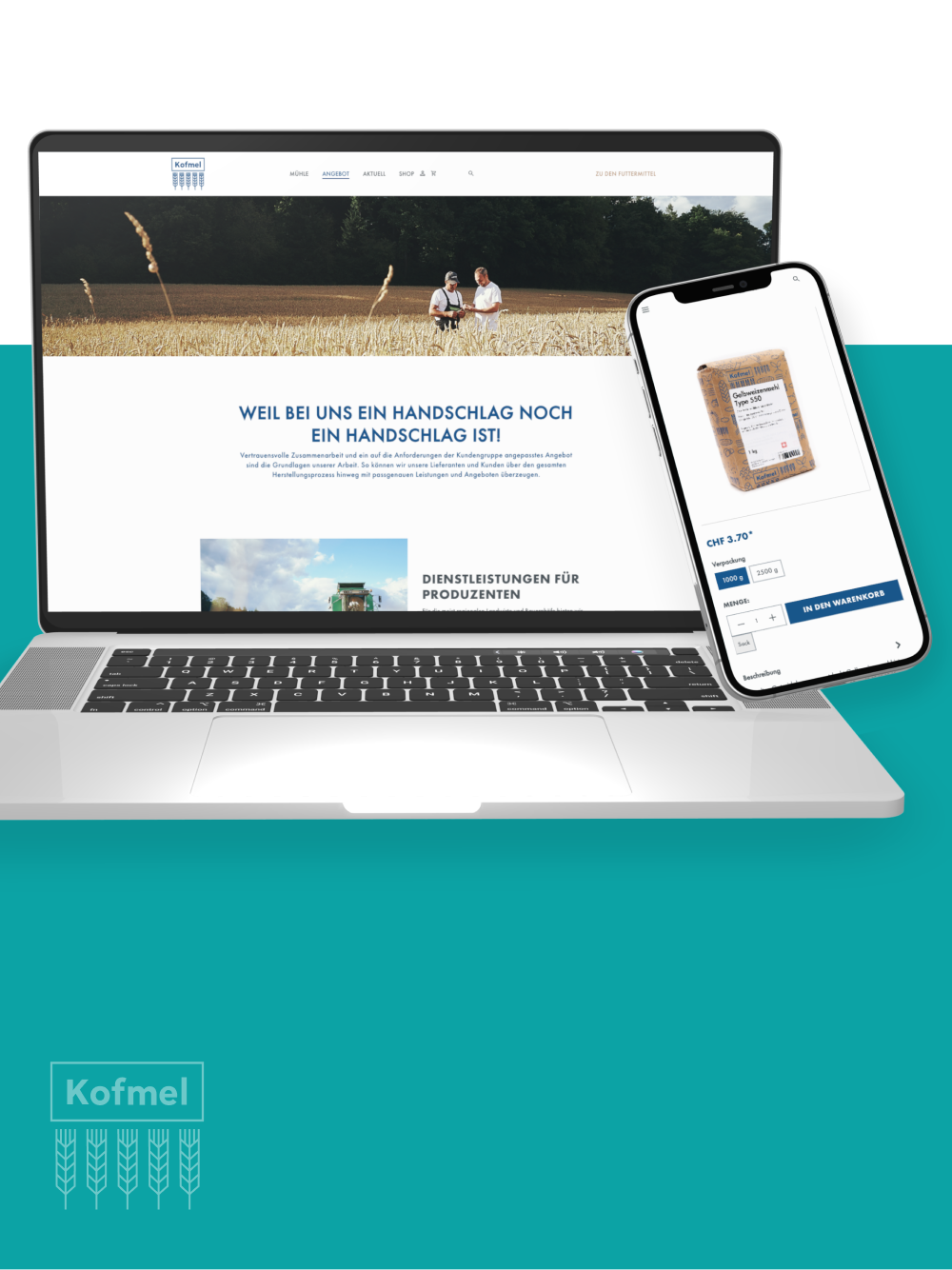
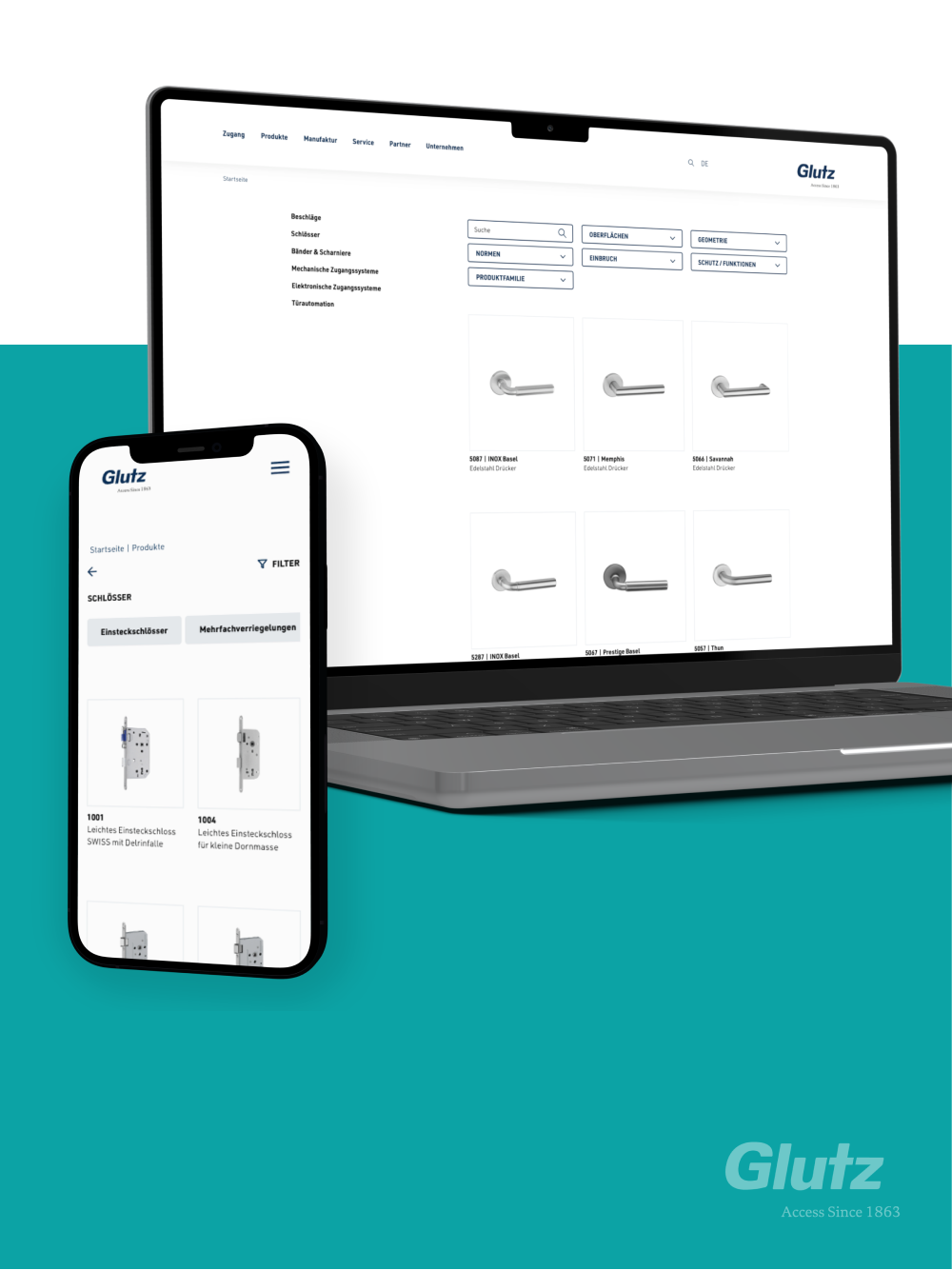
projects
More Flexibility with Composable Commerce
The demands on online shops and e-commerce platforms are changing almost daily. While traditional monolithic shop architectures can initially meet many needs quickly, they often lack the long-term flexibility required to adapt to changing requirements or support business growth. This is where the composable commerce approach comes in. It is based on the idea of building an e-commerce solution from independent, interchangeable components rather than relying on a single monolithic platform. Each component or “microservice” provides a specific function or feature, such as cart management, payment processing, or product data management. This modular approach allows individual components to be replaced as needed without rebuilding the entire shop from scratch. Although initial costs may be higher, the long-term benefits in flexibility and scalability can make it worthwhile.
For Composable Commerce, we rely on the following technologies:
Seamlessly Integrated E-Commerce Systems
ERP Integration
For a successful online shop, seamless integration of the ERP system as the central system of any business is essential.
CRM interface
ChatGPT: By leveraging personalization and creating positive customer experiences, you can make your webshop stand out. The foundation for this is high-quality customer data.dee.
PIM and DAM
High-quality product and media data are crucial for e-commerce success. We seamlessly integrate your PIM and DAM systems into your webshop.
Analytics and Data
Measure, Analyze, Optimize, Repeat. Online shops and e-commerce platforms provide valuable insights into your customers and their behavior.
Services
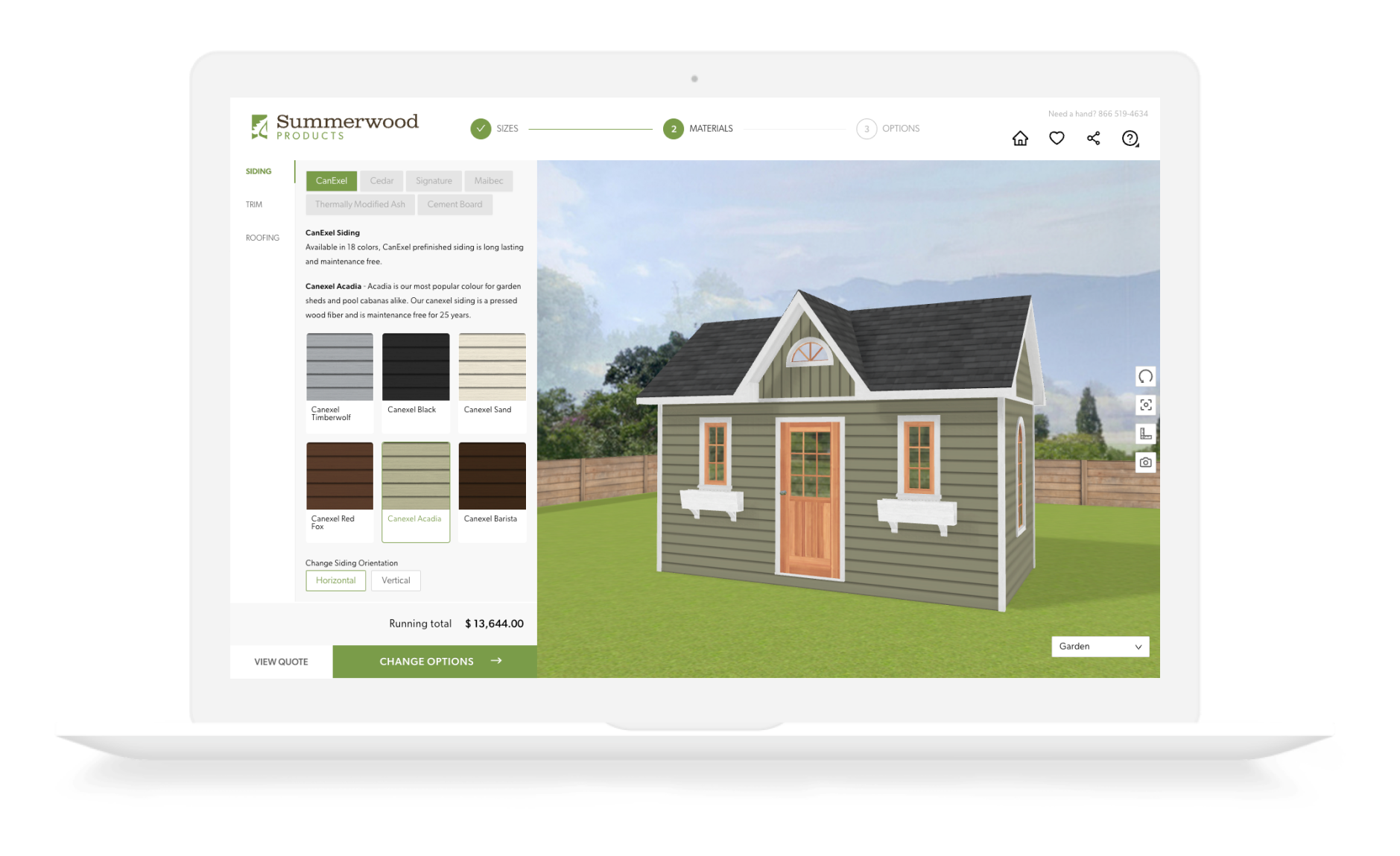
CPQ and Product Configurators
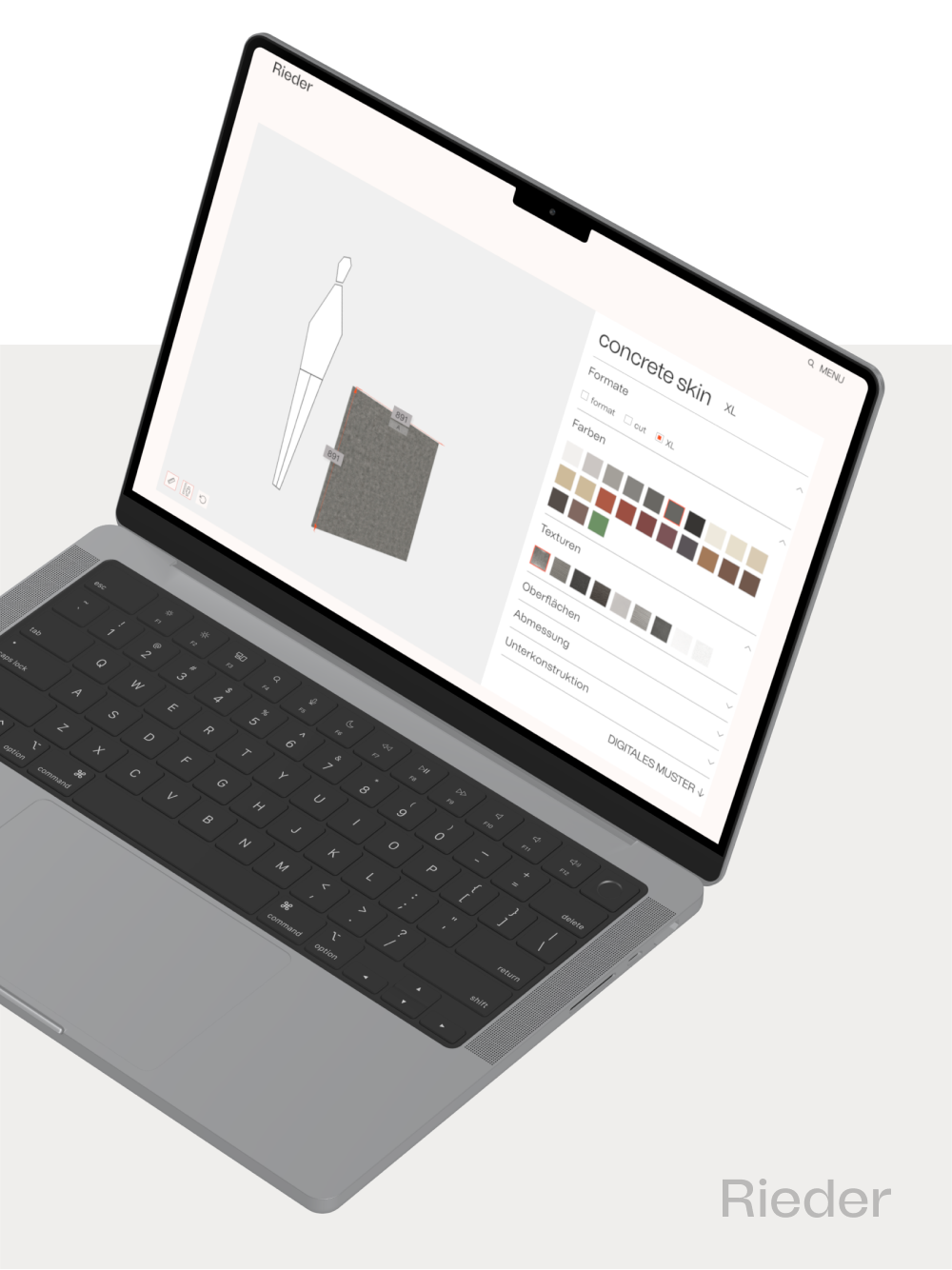
For complex and highly configurable products, a professional product configurator is essential. It can be seamlessly integrated into your online shop. Sitrwerk specializes in 2D and 3D online solutions and offers a proven CPQ framework capable of handling even the most complex and custom configurations.
FAQ - Frequently Asked Questions about E-Commerce
- What is the difference between e-commerce and an online store?
An online store is the specific application used to sell products or services on the internet. It typically includes features such as a product catalog, shopping cart, checkout, and payment processing. E-commerce, on the other hand, refers to the entire digital business model surrounding online sales. In addition to the store, this includes other processes and systems such as product data management, marketing automation, logistics integration, customer accounts, analytics tools, and CRM systems. While an online store is the sales channel, e-commerce refers to the entire digital ecosystem that enables and supports online sales.
- Which e-commerce architecture makes sense for us: monolithic, headless, or composable?
The right architecture depends on complexity, integration requirements, and long-term strategy. Many larger companies today rely on API-based or modular architectures to respond flexibly to new requirements. The goal is a platform that can be scaled and expanded without having to be completely rebuilt.
- How do we integrate e-commerce into our existing system landscape?
In larger organizations, e-commerce is never an isolated system. Typically, the ERP system remains the primary system for orders, pricing, and logistics, while a PIM system manages product data. The e-commerce platform acts as an interaction layer and orchestrates this data for customers and sales. A clear integration strategy is crucial to ensure that processes remain consistent across systems.
- How do we handle complex pricing structures and customer-specific terms?
Customized prices, discounts, or contract terms are typically managed in existing systems such as ERP or CPQ. The e-commerce platform accesses this data and displays it in a way tailored to each customer. This ensures that pricing logic remains consistent across all sales channels.
- How do we scale e-commerce across multiple markets, brands, or sales channels?
A scalable structure is crucial. Companies typically define clear market and client structures, such as by region, brand, or target audience. Content, products, and prices are managed centrally, while allowing for local adjustments. This enables e-commerce to be rolled out internationally without unnecessarily increasing complexity.
- How do we ensure that our platform remains scalable in the long term?
Long-term scalability is achieved through a clear architecture, modular systems, and clean interfaces. It is important that individual components can be further developed independently. This allows the platform to grow alongside new requirements, markets, or features without having to be completely replaced on a regular basis.
- How do we organize the platform’s operations, development, and ownership?
E-commerce is not a one-time project, but an ongoing platform. Companies need clear lines of responsibility for operations, development, and content. Often, interdisciplinary teams are formed that bring together technology, sales, and marketing to manage the platform over the long term.
- What does a modern e-commerce solution include?
An e-commerce solution is a digital platform that enables the online sale of products or services. In addition to the traditional online store, it often includes features such as product catalogs, customer accounts, order processing, payment processing, and integrations with enterprise systems. Modern e-commerce solutions are usually part of a larger digital commerce platform and also support complex B2B processes such as customized pricing, customer portals, or automated ordering workflows.
- How can complex B2B products be presented in e-commerce?
Many B2B products require explanation or come in numerous variants. Modern e-commerce platforms therefore support features such as product configurators, CPQ systems, and quotation processes. This allows even complex products to be digitally configured, priced, and ordered.
- How does an e-commerce platform evolve into a long-term digital sales platform?
Many companies start with an e-commerce project but gradually evolve the platform into a central digital sales platform. In addition to traditional ordering functions, additional services such as customer portals, product configurations, digital quotation processes, or self-service options for business customers are introduced. Through continuous expansion, integration of additional systems, and data-driven optimization, e-commerce thus becomes a central component of the digital sales strategy.