Product Configurator Software for Complex B2B Products
Digitized and Automated Sales Processes
More Online Leads Thanks to Product Configurator Software
Increasingly complex products, rising customer expectations, and time-consuming quoting processes pose major challenges for many manufacturers. Modern product configurator software digitizes the product configuration process, automates quote generation, and helps sales, partner, and end-customer teams configure complex products without errors.
Sitewerk develops customized product configurators for companies with complex B2B sales processes. Our comprehensive solutions combine product configuration, CPQ, guided selling, ERP, CRM, and PIM integrations, as well as 2D and 3D visualizations, into a seamless digital sales process. This results in faster, high-quality quotes, more efficient sales processes, and more qualified leads.
Reference Projects for Custom Product Configurator Software

E-Commerce Platform for Building Technology
50% lower sales costs, 100% digital sales process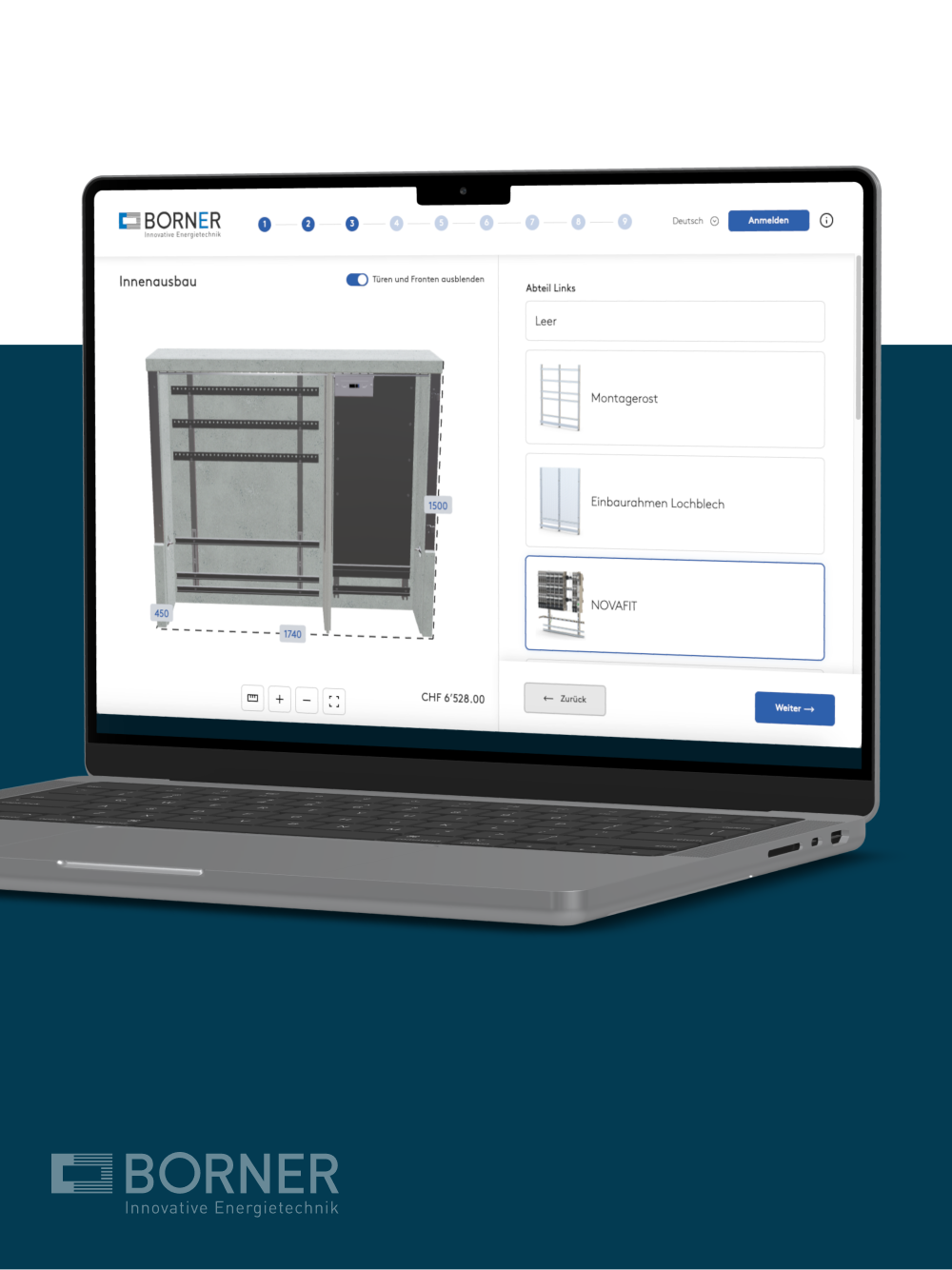
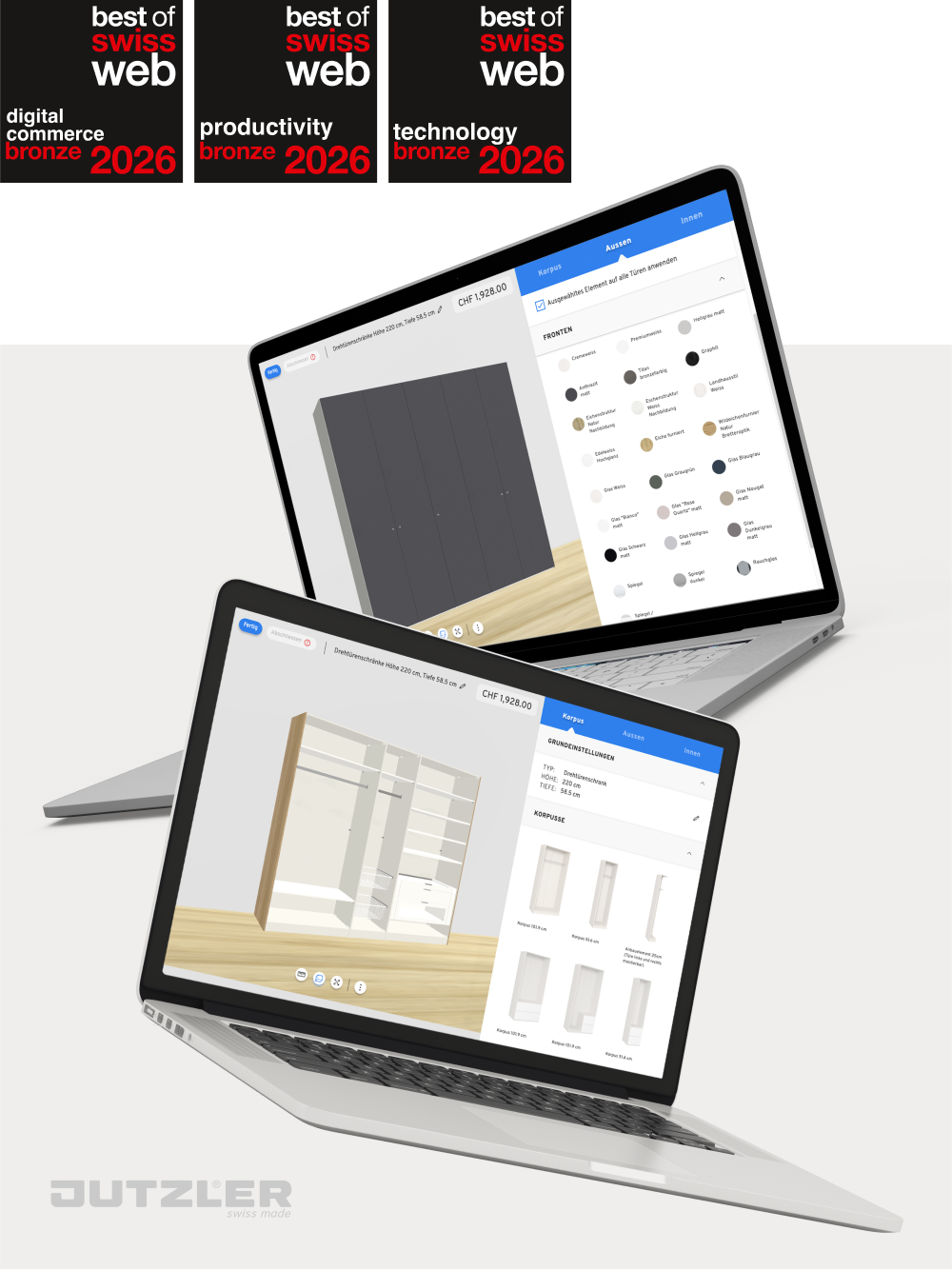
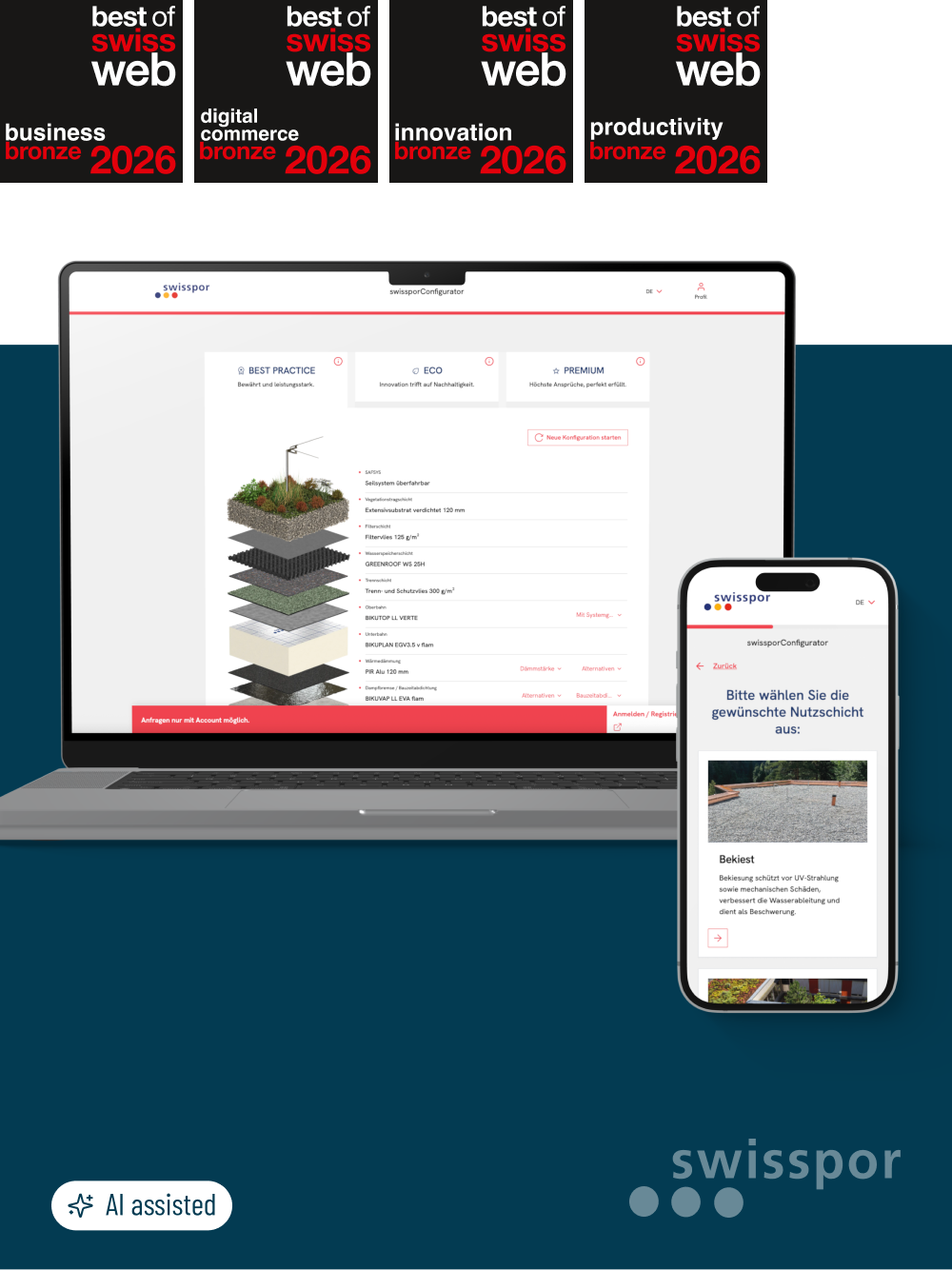
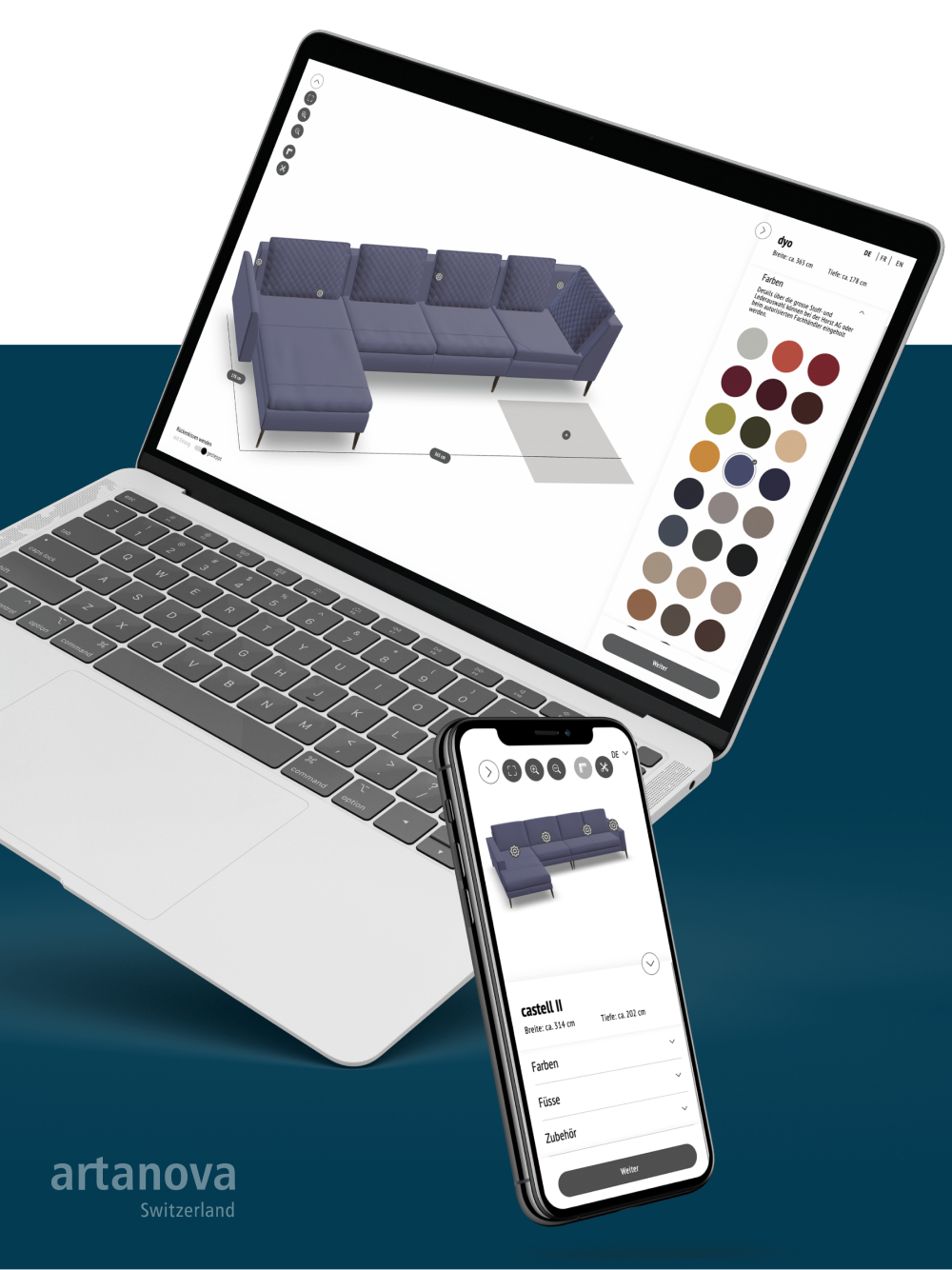
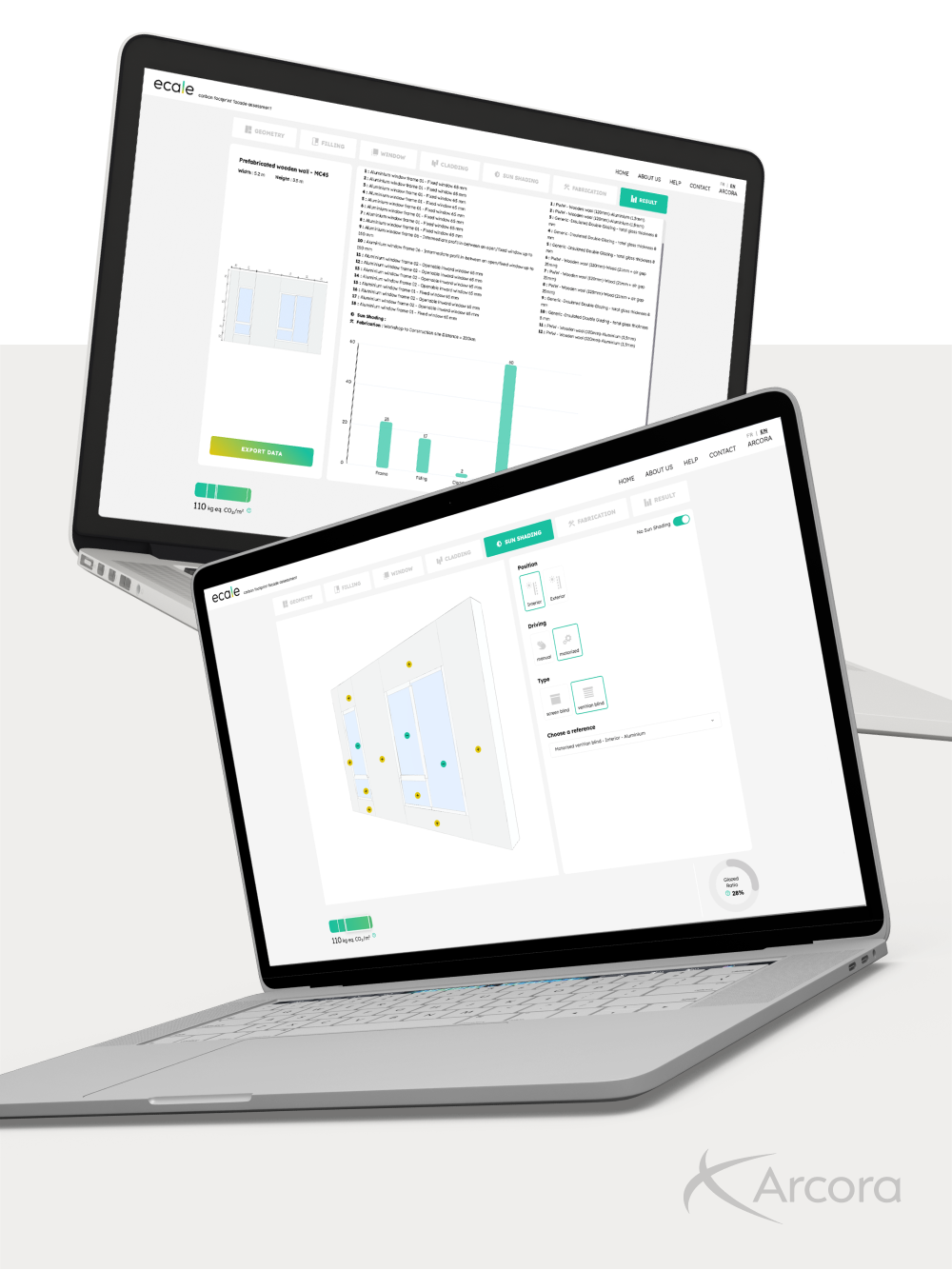
References
Our Expertise in Product Configurators
A modern product configurator encompasses much more than just product configuration. Depending on the business model and sales process, features such as 3D visualization, CPQ, quote configuration, or guided selling can be integrated in a targeted manner.
Our focus in product configuration
The added value of product configurators
Simplification of the Sales Process
Complex products can be configured and customized directly at the point of sale.
Higher Sales, Lower Sales Costs
A configurator increases efficiency and makes your offering available around the clock. Companies report up to a 400% increase in sales with a simultaneous 50% reduction in costs.
Seamless Quotation & Ordering Processes
By connecting to ERP, CRM, or PIM systems, your processes from lead generation to order placement run automatically. This allows you to accompany your customers from the initial lead, through the quote, to the order.
Mass Customization
They combine the advantages of mass production with the flexibility of highly customized products (batch size 1).
More Valuable Leads & more Detailed Customer Data
Configurations show what your customers really want, right up to the point where they leave the quotation process. We prepare this data for you so that you can generate more targeted leads, optimize marketing measures, and reduce wastage.
Customer Loyalty through Enthusiasm
With 2D and 3D visualizations, you can inspire your customers and place your product directly in VR or AR at its future destination.
Reasons Why Sitewerk Is the Best Provider for Configurator Software
Configurator Framework
Our CPQ system covers basic requirements and allows you to focus fully on your specific goals. It is a modular framework with features such as a product rule engine, master data management (parts lists), PDF quotation creation, and user and lead management.
Individual Solutions
Our product configurators and quotation calculators are individually tailored to your company. We take the needs of your buyers into account and design a sales process with an optimal user experience and appropriate design.
All from a Single Source
From consulting and prototype development to implementation, we support you in an agile and collaborative manner.
Interface Integration
We seamlessly integrate product configurators into existing systems, whether on websites, in online shops, or in ERP, PIM, CAD, or production software.
Web, Desktop and Mobile
We develop product configurators using modern web technologies—as apps, web applications, or desktop applications. Thanks to adaptive development for Android, iOS, and Windows, optimal use on all end devices is guaranteed. This saves time, costs, and resources.
Rendering
FAQ - frequently asked questions
- What is a product configurator?
A product configurator is a digital tool that allows customers to customize a product online, for example by selecting colors, materials, sizes, or features—often with real-time visualization of the result.
- Which products or industries are suitable for a product configurator?
Product configurators are suitable for any products with variants or customization options and can be used across a wide range of industries. In B2B environments, they are often used for technical or modular products such as machinery, industrial components, construction products, or technical systems. They help ensure that complex product variants are configured correctly, automatically calculate prices, and allow configurations to be transferred directly into quotes or orders.
- What benefits does a product configurator offer for sales teams and customers?
A product configurator simplifies the selection of complex products and makes product variants directly visible online. Customers can configure products themselves and immediately see which options are available. At the same time, configurators support sales teams by transferring configurations directly into quotes or orders, reducing configuration errors, and significantly speeding up the quoting process.
- What is required to build a product configurator?
A product configurator requires structured product data, variant logic, and clear rules defining which combinations are possible. Based on this, a user interface is designed that allows customers to configure the product. The configurator is often integrated with existing systems such as ERP, PIM, or e-commerce platforms so that prices, product data, and orders can be processed automatically. Many of these foundations are developed during the project, meaning missing data or rules can be structured and refined step by step.
- How much does it cost to implement a configurator?
The cost depends heavily on factors such as product complexity, visualization requirements (2D or 3D), system integrations, and the level of customization. Projects are usually calculated individually and can range from relatively simple configurators to complex CPQ solutions.
- How long does it take to develop a configurator?
Similar to pricing, the time to launch depends on the scope of the project and the complexity of the required visualization. It is often recommended to start with a minimal viable product (MVP) and a limited feature set in order to bring the solution to market quickly and refine it iteratively based on real usage.
- Can a configurator be integrated into my existing systems?
Yes. The software architecture can be adapted to your existing environment and integrated into your current systems. This may include applications, websites, online shops, or enterprise systems such as ERP, PIM, and CRM, allowing data and processes to work seamlessly together.